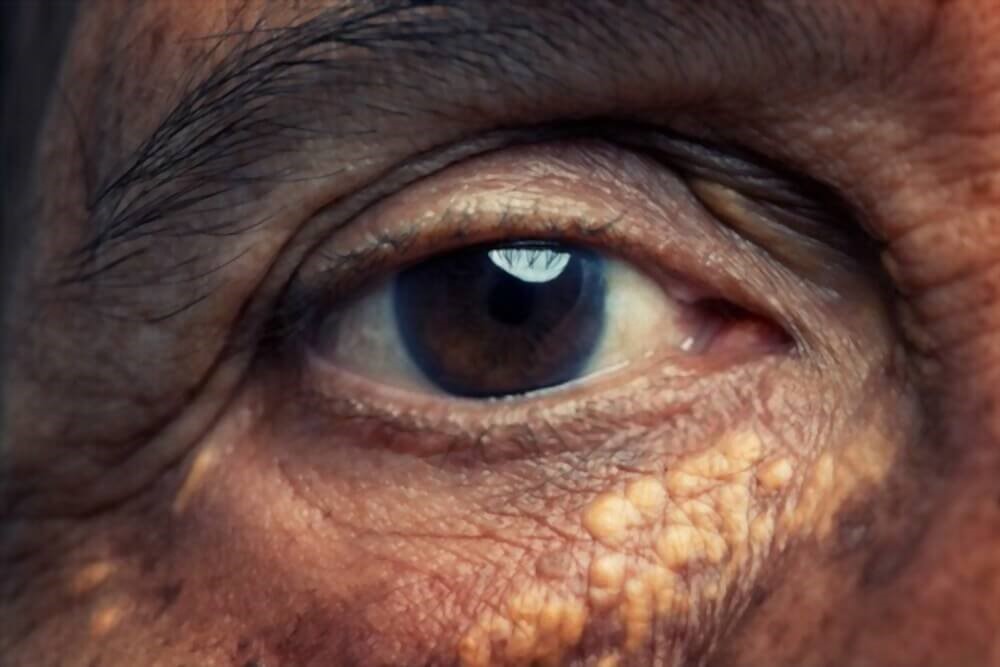
Xanthelasma Treatment: Every Option Explained
Key Takeaways
Xanthelasma treatment has two parts: checking the cause with your doctor, and improving the look of the patches. Managing cholesterol protects your health but rarely removes existing patches. For those, the options are an at-home cosmetic gel or a clinic procedure such as laser, freezing, a chemical peel or surgery.
- Xanthelasma rarely goes away on its own once it has formed.
- Start with a blood test with your doctor for cholesterol, blood sugar and thyroid.
- Diet, exercise and cholesterol medicine help your heart but won’t clear existing patches.
- Garlic and castor oil won’t remove patches, and applying them can irritate or burn the skin.
- Clinic procedures can work well, but carry risks of scarring, colour change and downtime.
- Patches can return after any method, so keeping cholesterol in check still matters.
- Xanthel® is a cosmetic cream made for your skin type and used at home. Results vary.
Will Xanthelasma Go Away Without Treatment?
Usually not. Once xanthelasma has formed, the patches tend to stay the same or slowly grow, and they very rarely fade by themselves. That’s why most people end up looking for a xanthelasma treatment, but the first step is making sure it really is xanthelasma.
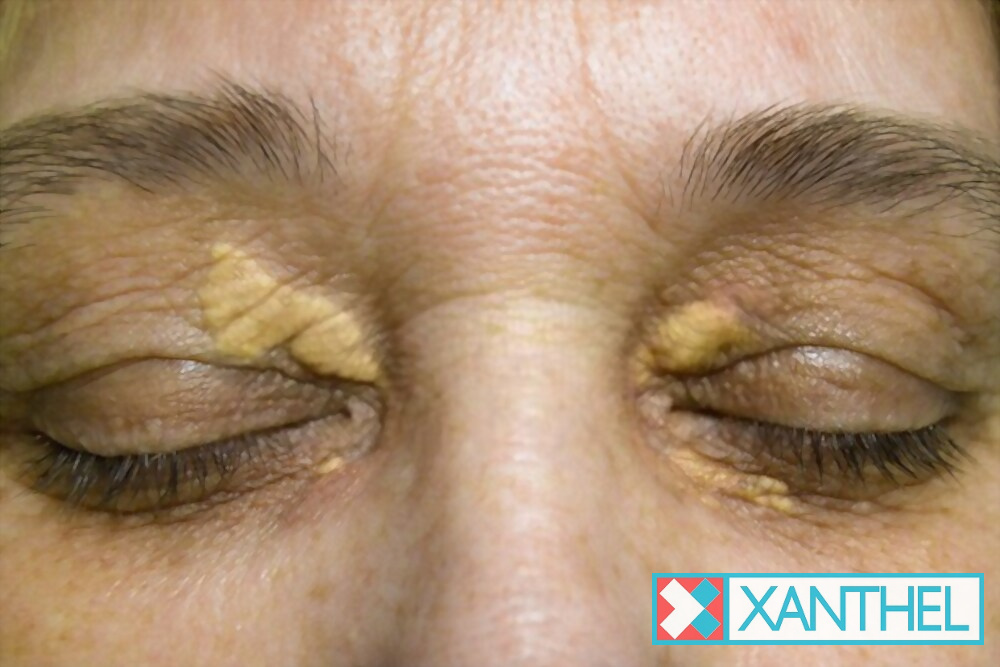
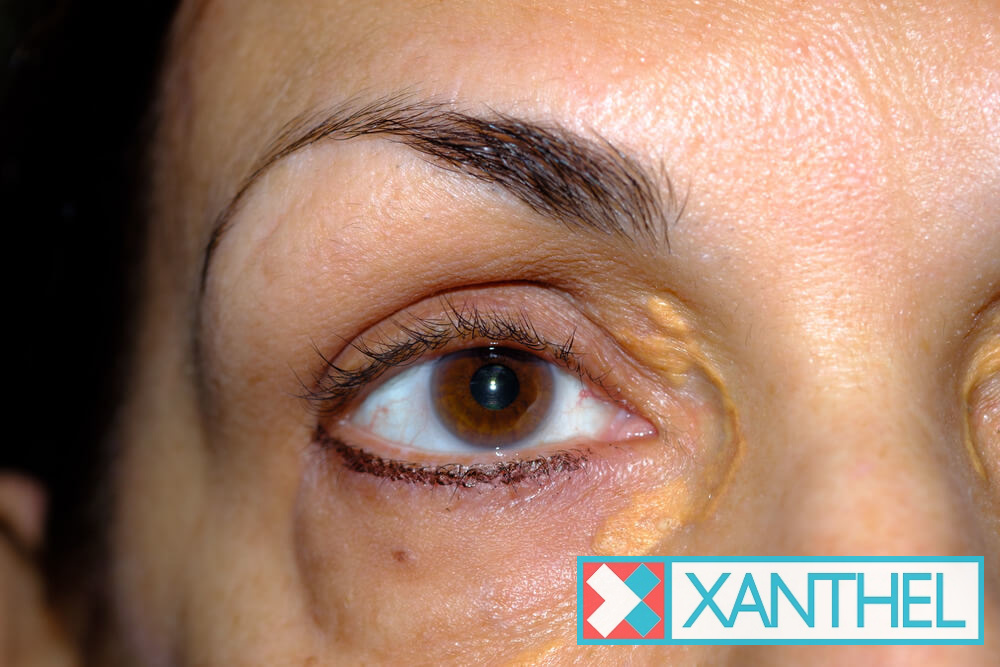
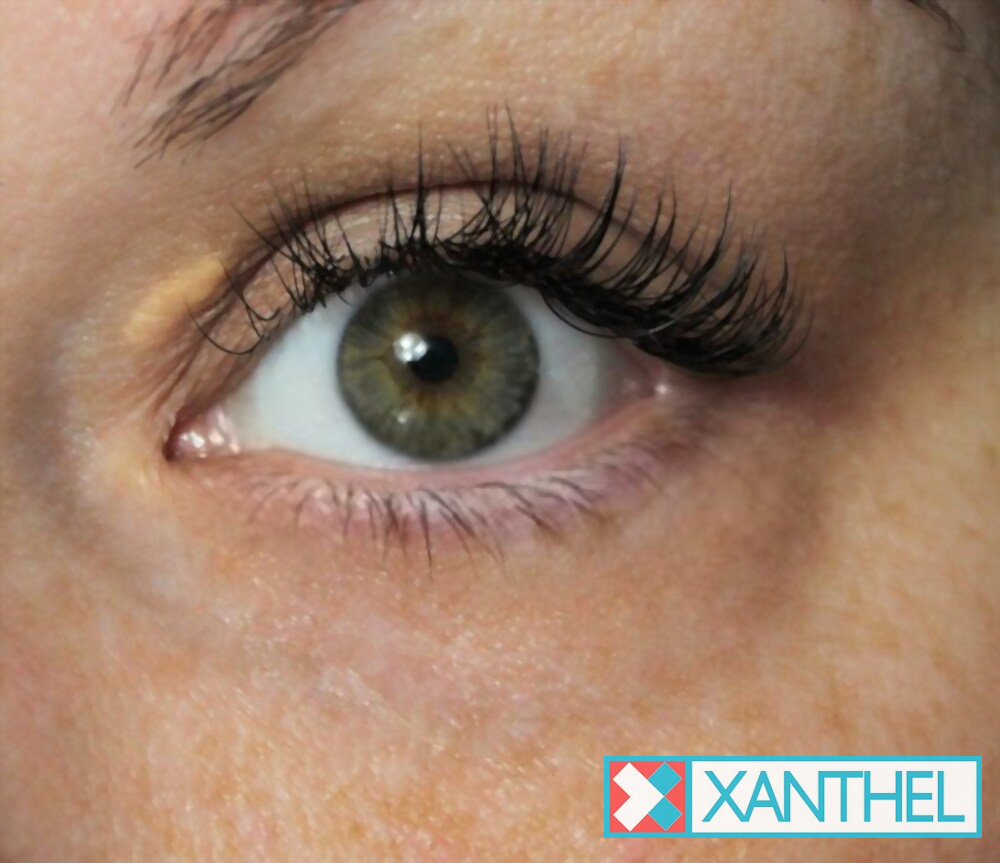
A doctor can usually tell just by looking. Xanthelasma is soft, yellow and painless, and sits on the eyelids, often near the nose. Other eyelid bumps can look similar: a stye is red, sore and full of pus, milia are tiny, hard white spots, and syringomas are small, firm, skin-coloured bumps from sweat glands. Each of these needs a different approach.
Your doctor will also usually suggest a blood test. About half of people with xanthelasma have normal cholesterol, according to StatPearls, but it’s still worth checking your cholesterol, blood sugar and thyroid. Then you can focus on the patches themselves, from home remedies to clinic procedures. Some of the options you’ll read about online are myths, and a few can cause real harm, so we go through each one honestly below.
The Two Parts Of Xanthelasma Treatment
Part 1: Check And Manage The Cause
- A blood test with your doctor for cholesterol and triglycerides
- Checks for diabetes, thyroid and liver problems
- A healthy diet, regular exercise and no smoking
- Cholesterol medicine if your doctor recommends it
- Helps stop new patches forming, but rarely removes existing ones
Part 2: Improve The Appearance
- Xanthel® cosmetic gel, made for your skin type and used at home
- Surgery for large or thick patches
- Laser or freezing in a clinic
- Chemical peels such as TCA, by a professional only
- See every method in our xanthelasma removal guide
Doing both gives you the best chance of clearer skin and fewer new patches.
Xanthelasma Treatment Options Compared
Here is how the main options stack up. Each one is covered in more detail further down.
Xanthelasma Treatment Options Side By Side
| Option | Where | Good to know |
|---|---|---|
| Xanthel ® | At home | Cosmetic gel made for your skin type, usually applied once; results vary |
| Laser | Clinic | No stitches; may need more than one session; risk of colour change |
| Freezing | Clinic | Quick; can leave lighter skin, especially on darker skin tones |
| TCA peel | Clinic only | Several sessions; never safe to try at home |
| Electrolysis | Clinic | Less common; best for small patches; risk of small scars |
| Surgery | Clinic | Most direct for large patches; leaves a scar line; usually costs most |
| Garlic or castor oil | Home | Won’t remove patches; can irritate or burn eyelid skin |
| Cholesterol care | With your doctor | Protects your heart; rarely clears existing patches |
For costs and recovery, see every xanthelasma removal method compared

How Xanthel® Works
Xanthel ® is a cosmetic cream made specifically for xanthelasma. Our founder, P. Cutler, developed it with consultant dermatologists after living with xanthelasma himself. Each kit is made up to order for your skin type and tone, and for where your patches are, so the formula suits you rather than being one size for everyone.
You apply it at home, usually just once, following the step-by-step instructions in the kit. There are no needles, no clinic visits and no time off work. It’s designed to improve the look of xanthelasma, and results vary from person to person.
Not sure whether it’s right for your patches? You can email us a clear photo for advice before you order. Every kit comes with free tracked delivery and a 30-day satisfaction guarantee.
See Real Customer Results
The best way to judge any treatment is to look at real results. Our before and after photos come from customers who shared them with permission, including a day-by-day series.
To find out more, press the Xanthel® logo below.


Garlic is one of the most popular home remedies you’ll find for xanthelasma, so it’s worth looking at honestly.
There are two ideas: eating it, or taking it as a supplement, to lower cholesterol, and rubbing it directly onto the patches.
The good news is that garlic may lower cholesterol and blood pressure a little, and that’s good for your heart. Studies of garlic supplements show modest drops in total and LDL cholesterol, much smaller than prescribed medicines such as statins.
The bad news is that this doesn’t make existing patches go away. The cholesterol in xanthelasma is held inside cells in the eyelid skin, so lowering your blood levels doesn’t clear it. There’s more on our garlic treatment for xanthelasma page.
Does Eating Garlic Help?
As part of a healthy diet, garlic is fine and may support healthier cholesterol, which could make new patches a little less likely. But no amount of garlic has been shown to remove or shrink xanthelasma.
If you enjoy it, keep cooking with it. Just don’t expect it to do the job of a treatment, and don’t spend months waiting for it to work while your patches grow.
As a treatment for the patches, garlic falls short. As one part of looking after your heart, it has a small place.

What Can Garlic Supplements Do For Your Health?
Garlic supplements are widely sold with big promises. Here’s what the research honestly shows:
Cholesterol. Garlic supplements may lower total and LDL cholesterol slightly. The effect is modest and varies a lot between products and studies.
Blood pressure. Several studies suggest garlic can lower blood pressure a little in people whose blood pressure is high.
Colds and immunity. Garlic is often taken in winter to fend off colds, but the evidence is weak and good-quality studies are few.
Cancer. Some studies link a diet rich in garlic with a lower risk of certain cancers, but that isn’t the same as garlic treating cancer, and supplements haven’t been shown to shrink tumours.
Blood sugar. A few small studies show slight changes in blood sugar, but garlic is no substitute for diabetes care.
Memory and dementia. Garlic contains antioxidants, but there’s no good evidence it prevents Alzheimer’s disease or dementia.
It’s also worth knowing that supplements vary hugely. Much of the research uses a specific aged garlic extract, while many tablets sold in shops contain far less of the active compounds, or different ones. Raw or cooked garlic in food is different again. That makes it hard to know what any single product will do, and it’s one reason the results of studies are so mixed.
If you do choose a supplement, buy from a reputable brand, follow the dose on the pack, and give it a fair trial alongside a healthy diet rather than expecting it to work on its own.
So garlic can be a sensible part of a healthy lifestyle, but it isn’t a cure-all, and it won’t clear xanthelasma.

Side Effects And Interactions
Garlic supplements aren’t risk-free. They can cause bad breath, body odour, heartburn and an upset stomach, especially at higher doses.
More importantly, garlic can make bleeding more likely. That means supplements aren’t a good idea if you take blood-thinning medicines such as warfarin, or if you’re about to have surgery. Garlic can also interact with some other medicines, so check with a pharmacist before you start, and never take more than the dose on the pack.
If lowering your cholesterol is the goal, your doctor can check your levels and suggest the approach most likely to help, which may include medicine.
What About Rubbing Garlic On The Patches?
The second garlic idea you’ll see online is to rub a raw clove, or tape a slice, onto the patch every day. When garlic is crushed or cut, it releases a compound called allicin, which is strong enough to irritate and even burn skin.

So why do some people say it worked? Often because what they had wasn’t xanthelasma at all. A stye, for example, is a small infection of an eyelash follicle or oil gland. It’s red, swollen and painful, and it usually clears by itself within a week or two, whatever you put on it.
Xanthelasma is different. It’s yellow, soft and painless, and it doesn’t come and go. If a spot on your eyelid hurts when you press it, it’s more likely to be a stye or another infection than xanthelasma. Other people see a short-lived change because a garlic burn has reddened or peeled the skin over the patch.
Xanthelasma isn’t an infection, so garlic’s antibacterial properties don’t help.

Is It Safe To Put Garlic On Your Eyelids?
No. Raw garlic on the skin is a well-known cause of chemical burns. Doctors regularly see red, blistered patches and open sores from garlic left on the skin, and eyelid skin, being the thinnest on your body, burns faster than most.
Repeating it every day makes things worse. Each application can damage the skin again before it has healed, which raises the risk of infection, darker marks and scarring. Scarred skin can be harder to treat later, whichever method you choose in the end.
There’s also your eye to think about. Garlic juice can run into the eye and sting badly, and rubbing your eye afterwards spreads it further.
Some people say their patch looked smaller after a few weeks of garlic. Usually that’s because the burned skin over the patch reddened, peeled or darkened, which can hide the yellow colour for a while. Once the skin heals, the patch is still there, sometimes with a mark around it.
If you’d like a natural approach, the most useful thing you can do is look after your cholesterol from the inside: oats, beans, nuts and oily fish, less saturated fat, regular activity and no smoking. That won’t clear existing patches, but it may make new ones less likely.
If you’ve already tried it, stop, rinse the area gently with cool water, and let it heal fully. See a pharmacist or doctor if the skin is very red, weeping or painful. If anything gets into your eye, rinse it with plenty of clean water.
If you’d like a gentler route, Xanthel® is a cosmetic gel made for the skin around the eyes and your skin type, applied at home, usually once. Results vary.
Press the Xanthel® logo below to find out more.

Taking Castor Oil By Mouth
Castor oil comes up almost as often as garlic. Some people take it by mouth hoping it will lower their cholesterol, and others rub it onto the patches. Let’s start with taking it.
Castor oil is a strong laxative. That’s its main medical use, and taking it regularly can cause cramps, diarrhoea and dehydration. There’s no good evidence that it lowers cholesterol or triglycerides in any useful way, and it certainly won’t remove xanthelasma that’s already there.
If you’d like to manage your cholesterol, speak to your doctor instead. A blood test will show where you stand, and they can suggest diet changes, more activity or medicine such as a statin if you need it. These do far more for your cholesterol than castor oil, garlic or any other kitchen remedy.
It’s worth knowing that castor oil is itself a fat. Around 90% of it is ricinoleic acid, an unusual fatty acid. That doesn’t make it harmful in small amounts, but it isn’t a cholesterol treatment either, and it won’t change the cholesterol held in your eyelid skin.
There are also good reasons some people should avoid it altogether. Castor oil can trigger contractions, so it should never be taken during pregnancy unless a midwife or doctor advises it. It isn’t suitable for children, and using any laxative regularly can upset the balance of salts in your body.
In short, swallowing castor oil offers no benefit for xanthelasma and comes with unpleasant side effects. Our page on castor oil and xanthelasma covers it in more depth.

What Is Castor Oil?
Castor oil is a pale vegetable oil pressed from the seeds of the castor plant, Ricinus communis, which grows widely in India, Africa and other warm regions. The seeds themselves contain a toxin called ricin, but it doesn’t pass into properly processed oil, which is why castor oil is safe to sell.
Most castor oil is cold-pressed, meaning the seeds are pressed without heat, then filtered. Jamaican black castor oil is made from roasted seeds, which gives it a darker colour and a stronger smell, but it isn’t proven to work any better.
It’s used as a laxative, in soaps and cosmetics, and in industry as a lubricant. In skin care it works mainly as a thick moisturiser, because it helps hold water in the skin. You’ll see many other claims made for it online:
Hair growth. Castor oil is often sold as a way to grow thicker hair, eyelashes or eyebrows. It can make hair look glossier, but there’s no good evidence that it makes hair grow.
Soothing skin. As a moisturiser it can help dry skin, but it can also cause irritation and allergic reactions, especially on sensitive areas such as the eyelids.
Wrinkles and ageing. Moisturised skin can look smoother for a while, but castor oil hasn’t been shown to boost collagen or reverse ageing.
Stretch marks. Keeping skin moisturised during pregnancy is sensible, but there’s no good evidence that castor oil prevents stretch marks.
So castor oil is a useful moisturiser for some people, but many of the claims around it go well beyond the evidence. That matters when you’re deciding what to put near your eyes.
Putting Castor Oil On The Patches

The most common suggestion is an overnight compress: a cotton pad soaked in castor oil and left on the eyelid while you sleep, night after night.
People like it because it feels gentle, it’s cheap and it’s easy to do at home. Some say their patches look softer after a few weeks. That’s usually because well-moisturised skin looks smoother, or because the lighting in a photo has changed, rather than because the patch has shrunk.
The trouble is that castor oil can’t reach the cholesterol under the skin. It’s a moisturiser, so it stays mostly on the surface. It won’t dissolve, shrink or lift xanthelasma out, however long you use it.

Can Castor Oil Irritate Your Eyes Or Skin?
It can. Castor oil is one of the oils more likely to cause contact dermatitis, an itchy, red rash, and eyelid skin is especially sensitive. A compress left on overnight gives it plenty of time to irritate.
It can also creep into your eye while you sleep, causing stinging, redness and blurred vision until it clears. If that happens, rinse your eye with plenty of clean water and stop using it. If the irritation doesn’t settle, see a pharmacist or doctor.
If you’d still like to use it on your face, try a patch test first: dab a little on the inside of your wrist and wait 48 hours to check for a reaction before going anywhere near your eyes.
Castor oil isn’t dangerous in the way acids are, but it’s not a xanthelasma treatment, and it’s not risk-free on the eyelids either. If you’d like to try it as a simple moisturiser, keep it well away from your lash line.
What Is A Better Option?
If you’re looking for something you can use at home that’s made for xanthelasma, Xanthel® is a cosmetic cream or gel depending on the position of the xanthelasma, made up for your skin type and for where your patches are. It’s usually applied just once, and results vary.
Press the logo button below to find out more.

Is Freezing Them Off A Sound Option
Freezing, also called cryotherapy, is a clinic treatment that dermatologists use for many skin growths, and some use it for xanthelasma too. It’s quick, needs no cutting, and is usually done in a single short appointment, sometimes followed by a repeat session.
It does carry risks around the eye, so it’s not suitable for everyone. Our page on xanthelasma cryotherapy goes into more detail about what to expect.
It’s usually cheaper than surgery and quicker than laser, which makes it appealing, but the results depend a great deal on the clinician’s experience with eyelids.
How Does Cryotherapy Work?
Cryotherapy uses extreme cold to destroy unwanted cells. Liquid nitrogen is sprayed on, or dabbed on with a cotton tip, for a few seconds. Ice crystals form inside the treated cells and break them apart, and the small blood vessels feeding the area are damaged too, so the cells die off.
Over the next few days the area blisters or swells, then forms a crust that falls away, usually within one to two weeks. On xanthelasma, clinicians use very short freeze times and protect the eye, because the eyelid is thin and swells easily. Larger or thicker patches may need more than one session, and not every patch responds fully.
What Is Liquid Nitrogen?
Liquid nitrogen is nitrogen cooled until it turns into a liquid. It’s colourless and clear, with a density of about 0.807 g/ml, and it boils at −195.79 °C, so it’s extremely cold and evaporates quickly at room temperature.
In medicine it’s used to freeze off warts, skin tags, sun damage and some pre-cancerous skin patches. In science it’s used in cryogenics, the study of how materials behave at very low temperatures, and in restaurants it’s used to freeze food and drinks instantly or create clouds of fog.
Because it’s so good at destroying cells, it’s easy to see why it has been tried on xanthelasma. The challenge is control. On a wart on the hand, a little extra damage to nearby skin is usually fine. On an eyelid, close to the eye, precision matters much more, which is why freezing xanthelasma should only ever be done by an experienced clinician.
You may see home freezing kits sold in pharmacies for warts. These use different chemicals that aren’t as cold as liquid nitrogen, but they’re still far too harsh for eyelid skin and are not designed for xanthelasma. Please don’t use them near your eyes.
What Else Is Liquid Nitrogen Used For?
Thanks to its very low temperature and low reactivity, liquid nitrogen has a surprising range of uses, including:
- Freezing warts, skin tags and some skin growths
- Freezing and transporting food
- Storing eggs, sperm, embryos and other biological samples
- Cooling computers, vacuum pumps and other equipment
- Protecting materials from oxygen
- Freezing water in pipes so plumbers can work on them
- Providing a source of very dry nitrogen gas
- Freeze branding cattle
- Making hard materials easier to machine or break
- Science demonstrations, such as freezing flowers or making liquid nitrogen ice cream

Is Freezing Safe Near The Eyes?
In experienced hands, it can be used safely, but it carries more risk around the eyes than on most other parts of the body. The eyelid is thin, it swells a lot after freezing, and the eye itself must be protected throughout.
The main risk is a change in skin colour. Freezing destroys pigment cells as well as the patch, so the treated area can end up lighter than the skin around it, and occasionally darker. This is more likely, and more noticeable, on darker skin tones, and it can be permanent.
Other risks include blistering, marked swelling that can close the eye for a day or two, scarring, and the patch returning. Freezing tends to suit small, flat patches better than large or thick ones.
Afterwards, you’ll usually be told to keep the area clean, avoid make-up until any blisters have healed, and protect the skin from the sun. Cold compresses help with swelling, which is often at its worst the morning after treatment. The final result can take several weeks to judge, as the colour of the healed skin settles.
If you’re considering it, ask your clinician how many people with xanthelasma they have treated, how they will protect your eye, and what results to expect on your skin tone.
If you’d rather avoid freezing, Xanthel® is a cosmetic gel designed to improve the look of xanthelasma at home, with no liquid nitrogen and no time off. Each kit is made up for your skin type. Results vary.
Find out more by pressing the Xanthel® logo below.

Xanthelasma Treated With A Laser?
Laser is one of the most widely used clinic treatments for xanthelasma, and in skilled hands it can give good results. Dermatologists use several types, including carbon dioxide (CO2), erbium:YAG, Q-switched Nd:YAG, argon and pulsed dye lasers.
Laser is usually best for people who want a clinic treatment without stitches and are happy to pay privately. A numbing cream or small injection is often used, so most people describe it as uncomfortable rather than painful.
The idea is the same for all of them: a beam of concentrated light heats and vaporises the patch, layer by layer, or breaks down the fat-filled cells within it. Your eye is protected with a special shield during treatment, and the eyelid is usually numbed first. Some patches clear in one session, while others need two or three. Our page on laser xanthelasma removal covers costs and recovery in detail.

How Do Lasers Work On Skin?
A laser produces a narrow beam of light at one specific wavelength, measured in nanometres (nm). Different wavelengths are absorbed by different things in the skin, such as water, pigment or blood, which is why there are different lasers for different jobs.
The Nd:YAG laser, for example, uses a crystal called neodymium-doped yttrium aluminium garnet as its light source. It’s a solid-state laser that can fire in short pulses or a continuous beam, and it’s used in medicine for everything from tattoo removal to eye surgery. CO2 and erbium lasers work mainly on the water in skin cells, vaporising thin layers of skin with each pass.
Broadly, there are two kinds. Ablative lasers, such as CO2 and erbium, remove the top layers of skin along with the patch, which tends to work well but means a longer healing time. Non-ablative lasers, such as Q-switched Nd:YAG and pulsed dye, heat the patch without removing as much of the surface, so healing is quicker, but more sessions are often needed. Your dermatologist will choose based on the size and depth of your patches and your skin tone.
What Are The Risks Near The Eye?
Lasers are powerful, which is why both you and the operator wear protective eyewear, and why a metal shield is placed over or under the eyelid during xanthelasma treatment. With proper protection, eye injuries are rare.
The more common risks are with the skin. The treated area is raw and crusty for a week or two, and it can heal lighter or darker than the skin around it, particularly on darker skin tones. There’s also a risk of scarring, especially with deeper treatment, and patches can come back, as they can after any method.
Choosing an experienced dermatologist or oculoplastic surgeon makes a real difference.

Is Laser Right For Your Patches?
Laser often suits small to medium patches, and people who want a clinic treatment without stitches. It’s less suitable for very large or thick patches, which may respond better to surgery. You’ll usually pay privately, often per session, and you may need more than one visit, so ask for a full quote up front.
Before you book, ask which type of laser the clinic uses, how many people with xanthelasma they have treated, how they protect your eye, and to see before and after photos of their own work on skin like yours. A good clinic will be honest about the risk of colour changes and the chance of patches returning.
If you’d rather not have laser treatment, Xanthel® is a cosmetic gel used at home, made up for your skin type. It’s usually applied just once, and results vary.
Press the logo button below to find out more.

Electrolysis, and the closely related techniques of electrodesiccation and radiofrequency, use an electric current through a very fine needle or probe to heat and destroy the patch. A few clinics offer it for xanthelasma, usually for small patches, but it’s much less common than laser, freezing or surgery, and results depend heavily on the skill of the practitioner.
What Is Electrolysis?
Electrolysis is best known as a way to remove unwanted hair permanently. A fine needle is slipped into the hair follicle, and a small electric current destroys the cells that make the hair grow. The same principle, using heat or a chemical reaction in the skin, can be used to break down other small skin growths.

The Three Main Types Of Electrolysis
- Galvanic electrolysis
- Thermolysis, or short-wave electrolysis
- Blend electrolysis
All three aim to damage the target cells and the blood supply feeding them, so they stop growing.
How Does Each Type Work?
Galvanic electrolysis uses a direct current (DC). When the needle is in place, the current reacts with the salt and water in the skin to make a tiny amount of sodium hydroxide, which damages the cells around the needle.
Thermolysis, or short-wave electrolysis, uses an alternating current (AC). It makes the water molecules around the needle vibrate, which creates heat, and the heat damages the cells.
Blend electrolysis combines the two. Sodium hydroxide is produced and then heated by the current, so chemical and heat damage work together.
Modern clinics are more likely to use radiofrequency devices, or a hyfrecator for electrodesiccation, than traditional hair-removal electrolysis. These deliver a very controlled burst of energy through a fine tip, which gently dries out and destroys the target tissue. The principle is the same, but the equipment is designed for skin growths rather than hair follicles, which gives the practitioner more control on delicate areas such as the eyelids.
For hair removal, electrolysis is slow because every follicle is treated one at a time. The same is true on xanthelasma: each part of the patch is treated in turn, which takes patience on a large area.
How Is It Used On Xanthelasma?
On xanthelasma, the practitioner numbs the eyelid, then touches or inserts a fine probe into the patch many times, gently heating it. The patch shrinks and darkens, then forms small scabs that fall away over the following week or two. Larger patches usually need several sessions.
Some small studies report reasonable results for small patches, particularly with modern radiofrequency devices. But there’s much less evidence for electrolysis than for laser or surgery, and it can be slow, fiddly work on a large patch. It isn’t a cure, and like every method, it doesn’t stop new patches forming.
What Are The Risks Of Electrolysis On The Eyelids?

Because electrolysis works by heat or a chemical reaction in the skin, it can damage the healthy skin around the patch as well as the patch itself. The most common problems are small pitted scars and changes in skin colour, either lighter or darker, which are more likely on darker skin.
Infection is possible while the scabs heal, so the area needs to be kept clean. If not all of the patch is treated, the remaining part can stay visible, and patches can return over time, as they can after any method. Treatment close to the lash line needs particular care.
Is Electrolysis Worth Trying?
For a small patch, in the hands of a practitioner with real experience of xanthelasma, it can be an option. For larger patches, or if you can’t find someone who has treated many cases, laser or surgery is usually more predictable. Always ask to see the practitioner’s own before and after photos, and be wary of anyone offering it cheaply without a proper consultation.
If you’d prefer something you can use yourself, Xanthel® is a cosmetic gel made up for your skin type and designed to improve the look of xanthelasma at home. Results vary.
Find out more below.

TCA, short for trichloroacetic acid, is a chemical peel that many dermatologists use on xanthelasma. The clinician dabs a small amount onto the patch with a fine applicator, at a strength chosen for that patch, while protecting your eye. The skin turns white within seconds, then crusts and peels away over the following week, taking much of the patch with it.
It’s quick, it’s done in a clinic, and it doesn’t involve cutting. Small, flat patches tend to respond best, while deeper ones usually need repeat sessions a few weeks apart. It stings while the acid is on the skin, but the session itself is short.
Dermatologists like it because it needs very little equipment, it can treat several small patches in one visit, and it usually costs less than surgery or laser. In experienced hands, many people are happy with the result.
The key point is that TCA is a strong acid. The strength, the amount and the technique all matter, which is why it should only ever be applied by a trained clinician. Our page on TCA for xanthelasma explains the whole process.

Healing And Recurrence After A Peel
After a TCA peel, the area looks red and slightly swollen, then forms a crust that falls away within about a week. The new skin underneath is pink and fades over a few weeks. Protect it from the sun and don’t pick the crust.
You’ll usually be asked to keep the area clean and dry, apply a simple ointment, and avoid make-up until the crust has fallen off. A follow-up visit a few weeks later lets the clinician check the result and decide whether another session is needed.
The main risks are scarring and lighter or darker patches of skin, which are more common on darker skin tones. As with every method, patches can come back: recurrence is common after any xanthelasma treatment, according to StatPearls.

Why TCA Should Never Be Used At Home
TCA is sold online in home kits, often with dramatic before and after photos. Please don’t use them. The strength on the bottle isn’t always what’s inside, it’s very easy to apply too much, and a drop can run into your eye in a second.
Reported problems after home use include chemical burns, open wounds that take weeks to heal, white or brown patches of skin, and scarring that pulls the eyelid out of shape. If acid ever gets into your eye, rinse it with plenty of clean, running water for at least 15 minutes and get urgent medical help.
Those online photos can also be misleading. Skin often looks clearer straight after a peel, when the patch has been burned away, but before any scarring or colour change has had time to show. The real result is the one you see months later.
If you want something you can use at home, choose a product made for the eyelids. Xanthel® is a cosmetic gel made up for your skin type, with no acid peel. It’s usually applied just once, and results vary.
Press the logo below to find out more.

Xanthelasma And Surgery.
Surgery means cutting the patch out of the eyelid and closing the skin with fine stitches. It’s one of the most direct treatments, because the whole patch is removed in one go, and it’s often recommended for large, thick or long-standing patches that other methods may not clear.
It may not be the best first choice for small patches, which often respond to less invasive treatments, or if you’re worried about a scar. It does tend to be the most predictable option for large patches that have spread across much of the eyelid.
It’s usually done privately by an eyelid (oculoplastic) or plastic surgeon, under local anaesthetic, as a day procedure. Our guide to xanthelasma removal surgery explains the operation in more detail.

What Affects The Cost Of Surgery?
Surgery is usually the most expensive option, and prices vary widely between countries, cities and clinics. These are the main things that make up the bill:
The surgeon’s fee. Specialist eyelid and plastic surgeons tend to charge more, and their experience is often worth it.
The facility. You’ll pay for the clinic or hospital space and the staff who support the operation. Hospitals often cost more than smaller day-surgery clinics.
Anaesthetic. Most xanthelasma operations use local anaesthetic. Sedation or a general anaesthetic adds an anaesthetist’s fee.
Follow-up visits. Some clinics include stitch removal and check-ups in the price, while others charge for each visit.
Medicines and dressings. Ointments, painkillers and dressings may be extra.
Grafts or eyelid surgery. Large patches may need a small skin graft, or combining with an eyelid lift, which adds to the cost.
Before you book, it’s worth asking a few questions. How many xanthelasma operations has the surgeon done? What will the scar look like, and where will it sit? Is the quote fixed, and does it include follow-up visits and stitch removal? What happens if a patch comes back? A good surgeon will answer all of these openly and show you photos of their own work.
How Much Does Surgery Cost?
It depends on all of the above, so always ask for a full written quote that includes follow-up visits before you book. Cosmetic surgery is rarely covered by health insurance.

What Happens During The Operation?
You’ll usually be awake, with a local anaesthetic injection to numb the eyelid. The surgeon cuts out the patch with a small margin of normal skin and closes the wound with fine stitches. On the upper lid, the scar can often be hidden in the natural crease, and some surgeons combine the operation with an eyelid lift, called a blepharoplasty, when there’s loose skin to spare. Most operations take under an hour, and you go home the same day.
Stitches usually come out after five to seven days, and bruising settles over one to two weeks. Our page on recovery after surgical removal goes through healing week by week.
What Are The Downsides?
The main downsides are the cost, a week or two of looking bruised, and a scar line. Most scars fade to a fine pale line over the following months, but they don’t disappear completely. Less often, there can be bleeding, infection or uneven eyelids, and on the lower lid, removing too much skin can pull the lid downwards.
Patches can also come back after surgery, as they can after any method, because surgery removes the patch but not the tendency to form new ones. A cholesterol check with your doctor is worthwhile, whichever route you choose.
Prefer To Avoid Surgery?
Xanthel® is a cosmetic gel made specifically for xanthelasma and used at home, with no scalpel, stitches or time off. Each kit is made up for your skin type and is usually applied just once. Results vary.

Xanthelasma Cream: A Simple Treatment At Home
Looking for a xanthelasma treatment without clinics, needles or downtime? Xanthel® xanthelasma removal cream is a cosmetic gel designed to improve the look of xanthelasma at home, so you can stop worrying about those patches every time you look in the mirror. Results vary from person to person.
Made For Your Skin
Each kit is formulated to order for your skin type and tone, rather than one formula for everyone, so it’s designed to work on your patches while staying gentle on the skin around your eyes.
Simple, Private And Quick
Apply it at home in a couple of minutes, usually just once. No clinic, no needles, and free tracked delivery worldwide.
Xanthelasma Treatment: Questions People Ask
Will Xanthelasma Go Away On Its Own?
Very rarely. Once patches have formed, they usually stay the same or grow slowly, even if your cholesterol improves.
Is There A Cure For Xanthelasma?
There’s no permanent cure. Treatments can remove or improve the look of patches, but new ones can form later, so looking after your cholesterol still matters.
What Is The Best Treatment For Xanthelasma?
It depends on the size of your patches, your skin tone and whether you want a clinic or home option. Small patches respond to most methods; large ones often need surgery.
Can Xanthelasma Come Back After Treatment?
Yes, after any method. Surgery, laser, freezing and peels remove patches but not the tendency to form them.
Does Lowering Cholesterol Clear Xanthelasma?
Not usually. It’s good for your heart and may slow new patches, but existing ones rarely fade.