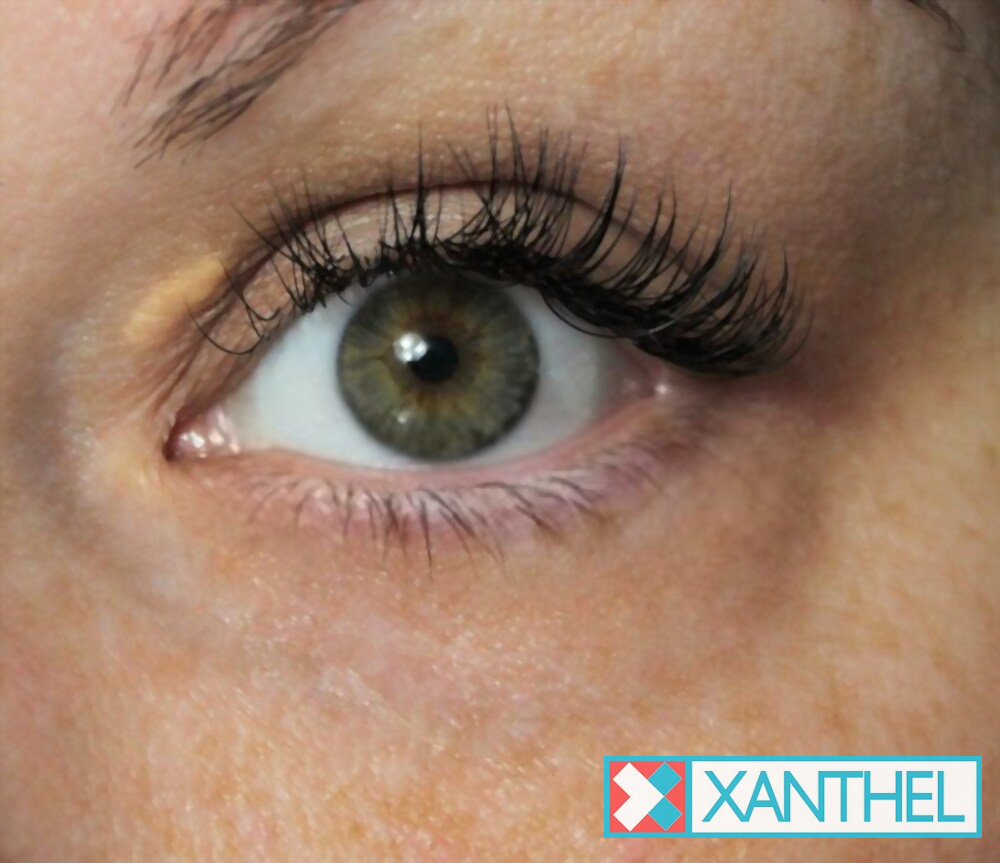
Xanthelasma Palpebrarum: Yellow Patches On The Eyelids
Key Takeaways
Xanthelasma palpebrarum is the medical name for soft, yellowish patches of cholesterol on the eyelids. It’s the most common type of xanthoma, it isn’t harmful in itself, and it can be treated if it bothers you.
- Patches usually start at the inner corners of the upper eyelids, often on both eyes.
- They’re made of fat-filled cells sitting just under the skin.
- It’s more common in women and in people aged 30 to 60.
- About half of people with xanthelasma have raised cholesterol, so a blood test is worth having.
- It’s been linked to a higher risk of heart disease, even with normal cholesterol.
- Patches rarely fade on their own. See our xanthelasma treatment options or our xanthelasma removal cream.
Xanthelasma Palpebrarum: What It Means
Xanthelasma palpebrarum, often shortened to xanthelasma, describes flat or slightly raised yellow patches on the eyelids. The name comes from Greek and Latin: “xanthos” means yellow, “elasma” means a plate, and “palpebrarum” means of the eyelids. So, quite literally, yellow plates on the eyelids.
The patches aren’t painful or itchy and don’t affect your eyesight, but many people feel self-conscious about them because they’re so visible. That’s completely understandable, and it’s the main reason people look for ways to treat them. The good news is that, once you know what it is, there’s plenty you can do.

How Xanthelasma Palpebrarum Looks And Feels
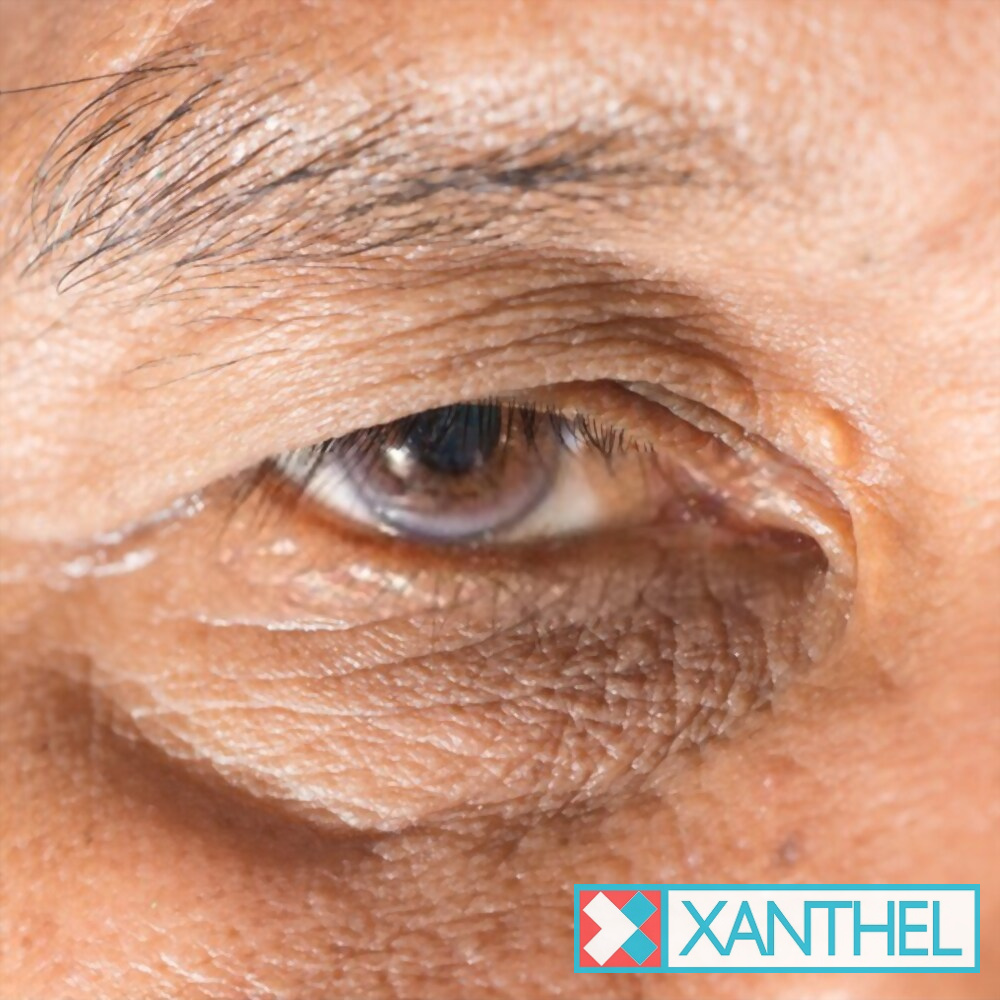
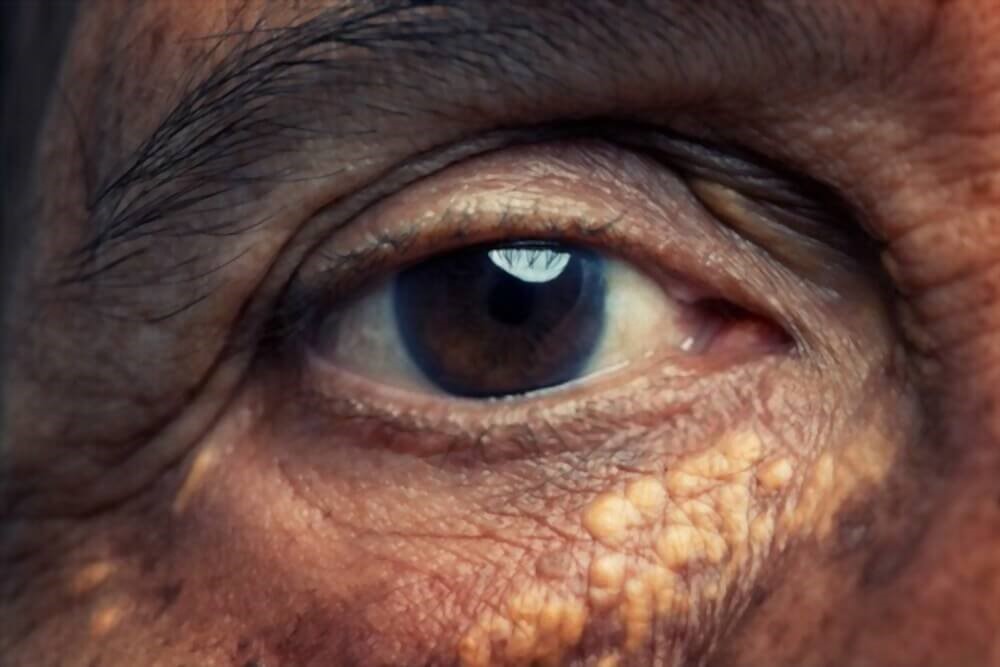
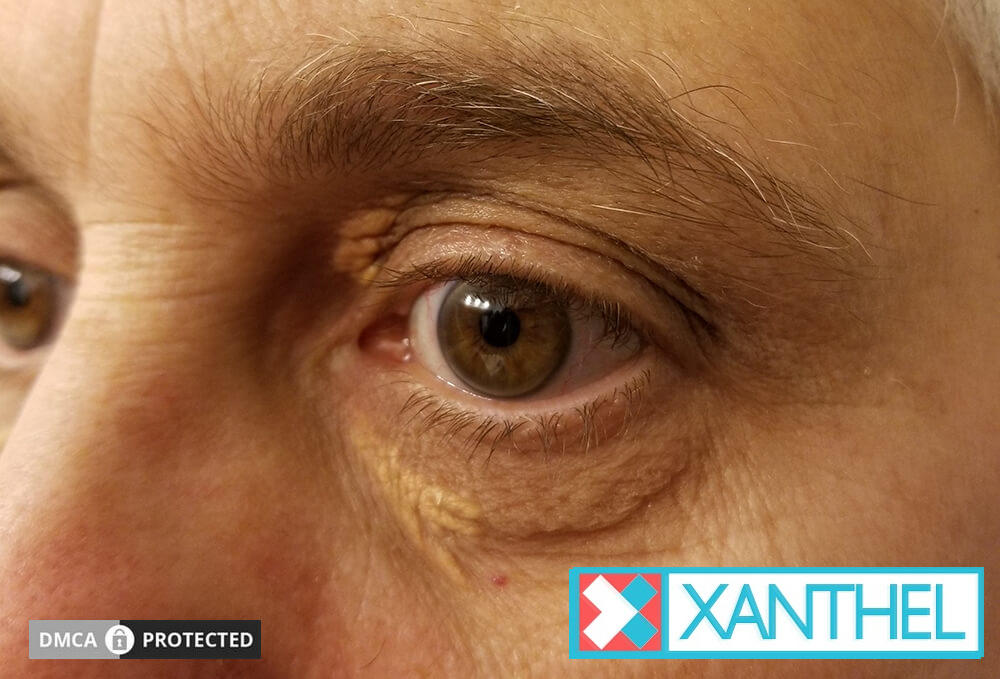
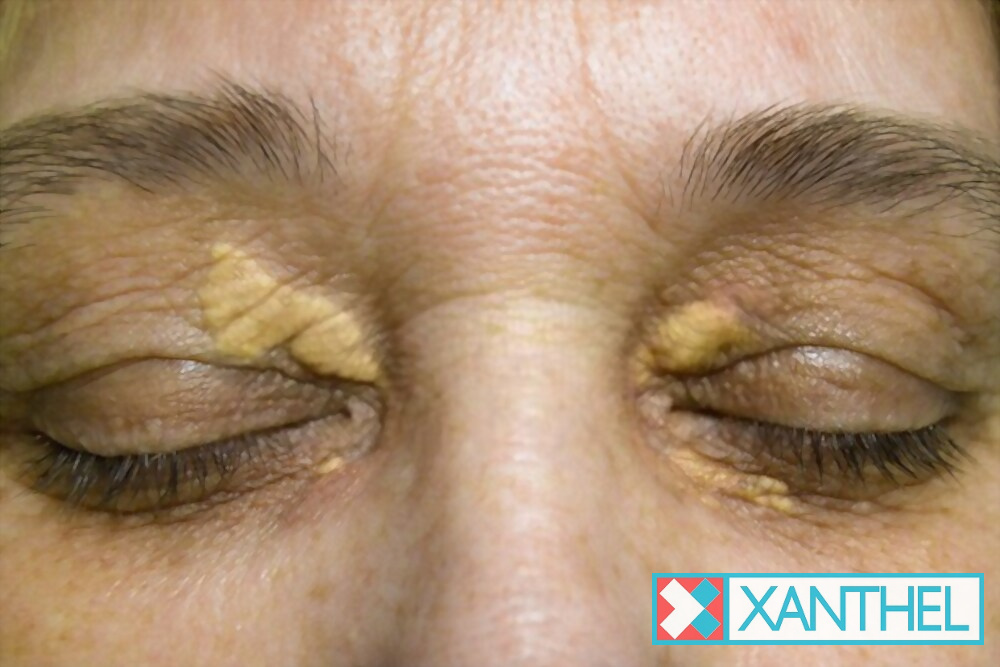
Xanthelasma can take a few forms. Some people have a single small spot; others have soft patches that join up and stretch along the lid. Most patches start at the inner corner of the upper eyelid, close to the nose, and they often appear on both eyes in a roughly mirror-image pattern. They can also form on the lower lids.
The patches are soft and velvety, with fairly clear edges, and range from pale lemon to orange-yellow. They grow slowly over months or years, and new patches can appear alongside the first. They don’t tend to shrink on their own. Doctors class them as plane xanthomas, which simply means flat fatty deposits in the skin. Our guide to what xanthelasma looks like has more detail and photos.
Xanthelasma often appears on its own, with no other deposits anywhere else on the body. When it does, it’s usually just a cosmetic concern. If you also have lumps or patches elsewhere, such as on your elbows, knees or tendons, tell your doctor, as those are more closely linked to blood fat levels and may need a fasting blood test.
Xanthelasma Palpebrarum Compared With Other Xanthomas
| Type | Where | Looks like | Blood fats |
|---|---|---|---|
| Xanthelasma | Eyelids, near the inner corner | Soft, flat, yellow patches | Normal in about half of people |
| Tuberous | Elbows, knees, buttocks | Firm, raised yellow nodules | Usually raised cholesterol |
| Tendinous | Achilles tendon, backs of hands | Smooth, firm lumps on tendons | Often inherited high cholesterol |
| Eruptive | Buttocks, thighs, arms | Small red-yellow bumps that appear suddenly | Very high triglycerides |
| Plane | Palm creases, neck, trunk | Flat yellow patches or lines | Linked to specific lipid disorders |
More on the differences: xanthoma and xanthelasma explained
Xanthelasma Palpebrarum In Plain English
Your blood carries fats, called lipids, around your body. The main ones are cholesterol and triglycerides. They travel in tiny packages called lipoproteins, including LDL (often called “bad” cholesterol) and HDL (“good” cholesterol).
Sometimes, fat from the blood leaks into the skin. Cells from your immune system, called macrophages, swallow it up and become swollen with fat. Under a microscope they look foamy, so they’re known as foam cells. When enough foam cells gather in the thin skin of the eyelids, they show through as a yellow patch. That’s xanthelasma palpebrarum.
Doctors put it in a wider group of conditions called xanthomas, which are all fatty deposits in the skin or tendons. Xanthelasma is by far the most common of them.

How Is Xanthelasma Palpebrarum Diagnosed?
A Look At Your Eyelids
Most doctors can recognise xanthelasma straight away from its colour, softness and position on the eyelids. They’ll also ask how long you’ve had it and whether it’s changed.
A Blood Test
Your doctor will usually suggest a fasting lipid test to check your cholesterol and triglycerides, and may check your blood sugar, thyroid and liver too. Picking up raised cholesterol early gives you the chance to protect your heart.
A Biopsy, Rarely
If a patch looks unusual, a small sample may be taken to look at under a microscope. This is rarely needed, because xanthelasma is so recognisable, but it can rule out other conditions that look similar.
Who Gets Xanthelasma Palpebrarum?
It’s more common in women and usually appears between 30 and 60, though younger people can get it too. People with raised cholesterol, diabetes or a family history of high cholesterol are more likely to develop it.

Why Does Xanthelasma Palpebrarum Develop?
In many people, it’s linked to raised levels of fats in the blood. High LDL cholesterol, high triglycerides or low HDL can all play a part, and these can be inherited or come from lifestyle. Conditions that affect how the body handles fats can contribute too, including diabetes, an underactive thyroid, some liver and kidney problems, and certain medicines.
Yet around half of people with xanthelasma have completely normal cholesterol. In these cases, experts think the way fats are handled in the skin itself, or local factors around the eyes, may be to blame. The eyelid skin is very thin and moves constantly, which may make it easier for fats to settle there. Some people first notice patches after a big change such as the menopause, pregnancy or a new medicine.
Smoking, carrying extra weight and a diet high in saturated fat can all make raised cholesterol more likely. Our guide to xanthelasma causes goes into each one in more detail, with practical steps to help keep new patches from appearing.
Is Xanthelasma Linked To Other Health Problems?
It can be. A large Danish study of nearly 13,000 people, published in the BMJ, found that people with xanthelasma had a higher risk of heart attack and heart disease, even when their cholesterol was normal. That’s why it’s worth seeing your doctor for a check-up, not to worry, but to look after your long-term health.
Different Kinds Of Xanthoma
Xanthelasma is one of several types of xanthoma. Here’s how the others differ and when they need a doctor’s attention.
Xanthelasma (Eyelid Xanthoma)
Soft yellow patches on the upper and lower eyelids, usually starting at the inner corners and often on both sides. It’s the most common xanthoma by far, and around half of people with it have normal blood fats.
It’s mainly a cosmetic concern, although a cholesterol check is still sensible. It’s the only type on this list that Xanthel® is designed for.

Tuberous Xanthomas
Firm, painless, red-yellow lumps that form over pressure points such as the elbows, knees, heels and buttocks. They can start small and join together into larger nodules that sit deeper in the skin.
They’re usually linked to raised cholesterol and some inherited lipid disorders, so they should always be checked by a doctor. Treating the underlying cholesterol can help them shrink over time.

Tendinous Xanthomas
Smooth, firm lumps that grow slowly under the skin along tendons, most often the Achilles tendon at the back of the ankle and the tendons on the backs of the hands.
They’re closely linked to familial hypercholesterolaemia, an inherited cause of very high cholesterol, so anyone who has them should see their doctor.

Diffuse Plane Xanthomatosis
A rare form where flat, yellow-orange patches spread over large areas of skin, such as the eyelids, neck, upper body and skin folds. Unlike most xanthomas, blood fats are often normal.
Because it can sometimes be linked to blood conditions, doctors usually recommend further tests if it appears. It most often affects middle-aged and older adults, and it’s not something to treat at home.

Eruptive Xanthomas
Crops of small red-yellow bumps that appear suddenly, often on the buttocks, shoulders, arms and thighs. They can be itchy or tender. They’re linked to very high triglycerides, often with poorly controlled diabetes, which can also inflame the pancreas.
If you notice them, see a doctor promptly. They usually settle within weeks once blood fats are brought down with diet and medicine.

Plane Xanthomas
Flat yellow patches or streaks in the skin. When they appear in the creases of the palms, they’re called palmar xanthomas and are a classic sign of an inherited condition called type 3 dysbetalipoproteinaemia.
Plane xanthomas can also form on the neck and trunk. Xanthelasma itself is technically a plane xanthoma on the eyelids. Any new flat yellow patches elsewhere on the body are worth showing to a doctor.

Xanthoma Disseminatum
A very rare condition, not caused by high cholesterol, in which many small yellow to red-brown bumps appear, often in skin folds such as the armpits and groin, and sometimes on the eyelids or inside the mouth and throat.
Blood fats are usually normal. It needs care from a specialist, as it can affect other parts of the body.

Most of these xanthomas are signs that something is going on with blood fats, so they always deserve a check-up. Xanthelasma palpebrarum is different: it’s common, often happens with normal cholesterol, and is mainly a cosmetic concern. Once your doctor has checked your health, you can decide whether and how to treat the patches. There’s no rush, and no wrong answer: some people leave them, others prefer to have them treated.
Xanthelasma Under The Microscope
What A Biopsy Shows
Under a microscope, xanthelasma shows clusters of foam cells: immune cells packed with droplets of fat, which give them a pale, bubbly look. They sit in the upper layer of the dermis, just under the surface of the skin, often gathered around small blood vessels. Some samples also show larger cells with several nuclei, called Touton giant cells. Because the deposits sit so close to the surface, they show through the thin eyelid skin as yellow patches.


Is Xanthelasma Palpebrarum Dangerous?
The patches themselves aren’t dangerous. They don’t turn into cancer, they aren’t contagious, and they don’t affect your eyesight. Very large patches can occasionally make the eyelid feel heavy, but that’s rare.
What matters more is what they might be telling you. Because xanthelasma can be linked to raised cholesterol and heart disease, it’s a good prompt to see your doctor for a blood test and a general check-up, even if you feel completely well. If your results are normal, that’s reassuring, and you can focus on the cosmetic side.
If a patch changes quickly, bleeds, becomes sore or looks different from the others, get it checked, as it may be something else.

What Can You Do About Xanthelasma Palpebrarum?
First, look after your health: get your cholesterol checked and follow your doctor’s advice on diet, exercise or medicine. That won’t usually shrink existing patches, but it helps your heart and may make new ones less likely.
To improve the look of the patches themselves, you can choose a clinic treatment such as laser, freezing, a chemical peel or surgery, or treat them privately at home. Our xanthelasma removal guide compares every option with the pros, cons and costs, and you can see real results on our before and after page.
Whatever you choose, avoid harsh home remedies such as acids, garlic or sharp tools near the eyes. The eyelid skin is thin and easily scarred, and the risks aren’t worth it.

Xanthelasma Cream: For Patches On The Eyelids
Ready to do something about your xanthelasma palpebrarum? Xanthel® xanthelasma removal cream is a cosmetic gel designed to improve the look of xanthelasma without surgery, lasers or time off, so you can stop worrying about those patches every time you look in the mirror. Results vary from person to person.
Made For Your Skin
Each kit is formulated to order for your skin type and tone, to be effective in it’s function.
Simple, Private And Quick
Apply it at home in a couple of minutes, usually just once. No clinic, no needles, and free tracked delivery worldwide.
Xanthelasma Palpebrarum: Questions People Ask
Is Xanthelasma Palpebrarum The Same As Xanthelasma?
Yes. Xanthelasma palpebrarum is the full medical name, and most people just call it xanthelasma. Both mean yellow patches on the eyelids.
Does Xanthelasma Palpebrarum Mean I Have High Cholesterol?
Not always. About half of people with it have normal cholesterol, but a simple blood test is the only way to know.
Can Xanthelasma Palpebrarum Go Away On Its Own?
It very rarely does. Patches usually stay the same or slowly grow, even when cholesterol is brought down.
Is Xanthelasma Palpebrarum Hereditary?
It can run in families, especially where high cholesterol is inherited. If several relatives have it, mention this to your doctor.
Can Xanthelasma Palpebrarum Affect My Eyesight?
No. The patches sit in the skin of the eyelids, not in the eye itself, so they don’t affect your vision.